Wednesday, November 22, 2017

Are You Grateful for Mixed Blessings?

On Thursday, many of us will be sitting down to dinner with family or friends and gratitude will be mentioned as we offer a blessing on the meal. It’s appropriate to the day of course; we were taught the Pilgrim’s story of thankfulness for surviving their first difficult year in the New World. 

At many of our tables there will be a nod to the formerly religious aspect of the day as someone suggests, “Let’s go around the table and everyone say what they’re grateful for.” 


It’s easy at times like this to name good health, career success, and our kid’s accomplishments, but we often forget that some of our best gifts don’t come in pretty wrapping.  I suggest that we put a new spin on this tradition. This year ask your guests: What are the mixed blessings in your life this year?

Here are some examples: There was the day you were running late and therefore missed the big accident or traffic jam; or the day you skipped church but when channel surfing heard a speaker that gave you a new outlook on life; Maybe it was the day you got lost in a new part of town but in your wandering found a store that sold exactly what you had been hunting for months. Get the idea?

Then try upping the ante a bit: How about when you got fired but at out-placement you found the work you really want to do? Or maybe the person you wanted to marry said “No”, and broke your heart, but months later you met the one you were supposed to make a life with. 

You get the idea, but let’s push it a bit farther. How about the serious illness that knocked you off your feet but having to stay in bed gave you time to recast your life? Or maybe the struggle to accept a more permanent disability made it plain who your friends really were or revealed a talent you didn’t know you had? 

Okay, even harder now: What about the death of a loved one that devastated you but one day in the midst of grief you felt something other than pain and realized you were feeling joy like nothing you had ever felt and you knew that you could feel it because the grief had cracked you open.

 Similarly, you may have gotten a gift from someone else’s death when you saw just how short life is and you decided to quit with the worry/status/fear and get on with your life.

These mixed blessings are not easy to accept or admit, and sometimes it is just faith itself that is the gift. It can be in the midst of terrible things that we’re forced to develop trust, and then we find, when the crisis is over, that our new beliefs are ours to keep.

Of course the graduate school level of this kind of gratitude is saying “Thank You” even before the good part comes. If you’ve had experience with mixed blessings you begin to know-- even while life is painful or unpleasant-- that there will be meaning in it. And so we say Thank You –purely on faith –even when we’re getting hit hard.

Yes, some of these blessings come in less than Hallmark moments. Maybe it was the painful feedback from a friend that clued you in on the truth about your personality flaws, or the DWI that was humiliating and expensive but it was also what made you look at your problem and change your life. Maybe it was an emotional breakdown that allowed you to put yourself back together in a new and stronger way.

As parents we coach our kids with, “What do you say?” when a gift is given. Can we learn to say that to ourselves when life hands us a package that isn’t very pretty?
So when that, “What are you grateful for?” comes around at your Thanksgiving table this year don’t groan, but dig deep. Name the blessings that came from pain and grief or loss and trouble.

When we can say Thanks for both the good and the bad, for the easy and hard times, then, just like the Pilgrims, we’ll have a real Thanksgiving.


***
More holiday essays in the collection: "Looking for Signs" published by Troy Bookmakers.

Thursday, November 09, 2017

The Hidden Casualties of War

At the start of American sporting events we are expected to stand up to sing the national anthem. 

But at many sporting events there is now another requisite moment during the game when we observe a “tribute to our Armed Forces serving overseas”. A soldier in full dress, with excellent posture, comes onto the field and for that moment we pause again.  We feel virtuous and patriotic. 

We mean it—we really do. For anywhere from ten to almost 60 seconds we really care about the men and women of our military. We feel appreciation and even concern. And then satisfied that we have cared, and as the soldier, so beautifully decorated, is escorted out of sight, we return to our debate about favorite teams and best commercials.

Our soldiers are dying. They are dying the way that soldiers have always died—killed in combat and by tragic wartime accidents but they are also—increasingly- dying at home by their own hands. That is the part we don’t see, don’t honor and don’t stand up for.

The soldiers we see at sporting events are clean and composed and they exude strength and will and endurance. The conceit is that they are there to remind us of the hardship they endure for us but in fact they may be there to cajole us into believing that the respect we feel for them is enough. 

What if during the Super Bowl or on Baseball’s Opening Day we saw a group of American soldiers twitching with the physical and mental pain of post-combat fatigue, stress and disability? Not the heroic amputee—we know that symbol of sacrifice—but the one whose hope, sanity and peace have been cut off. What if we stood for 60 seconds to witness the grown men and women who serve and protect us while they shake and cry and go numb?  What if we saw them as they struggle to manage their depression, anxiety and dissociation? 

As our nation’s longest war moved past ten years we arrived at a terrifying statistic. The Army’s own briefing on military suicide reported that, “If we include accidental deaths which are the result of high-risk behavior (drugs, alcohol, driving) we find that less young men and women die in combat than by their own actions.” It is for these men and women that we should be holding our hands over our hearts. 

I don’t come from a military family. My understanding of this collateral damage came when I spent a few years interviewing China Marines—pre-World War II veterans. In China they experienced the combination of bloody atrocity and deadly boredom that today’s soldiers endure. That research became the book, “Never Leave Your Dead”. 

The men I visited were in their 80’s when they told me how they still—65 years later—struggled with their addictions, insomnia, grief and tragically how their trauma had impacted their families –some for two generations. 

We are slow learners. Military mental illness is always with us. It’s had many names –all euphemisms to keep it just out of sight. It is Soldiers Heart, War Fatigue, Shell Shock, Nostalgia, Viet Nam Syndrome and Post-Traumatic Stress Disorder.

Every faith has a tenet that asks us not to close our eyes to suffering. And here too –with our warriors—we should not look away.  

***
Twenty years of research led to this book--a history of military trauma, and a way to see how war trauma impacts a family.

Tuesday, October 31, 2017

Celebrating The Day of the Dead

On Wednesday I’ll celebrate Dia de los Muertos, the Day of the Dead.  It’s not a holiday I grew up with but one I’ve borrowed from the Southwest and Mexico. And it’s become one of my favorite holidays –in part because it’s a good spiritual counterpart to Halloween. Except for the candy, October 31st doesn’t leave much for grownups.

Being scared of goblins and ghoulies lost its sway when I got old enough to lose people that I loved. The dead just aren’t scary in the same way anymore. In fact, I’d welcome a visit from many of them.  

That’s what Day of the Dead is about. There is a belief that on this day the veil separating this world and the next is thinner and so it’s a time we can be closer to those that we love
who are dead.

Day of the Dead celebration centers on rituals for remembering loved ones. We can visit them in our imagination or feel their presence. It can mean prayer or conversation, writing a letter or looking at old photos. The tradition that I use includes making an ofrenda, or altar, something as simple as putting photos and candles on the coffee table and taking time to talk about these loved ones and remember them. We also have spicy hot chocolate as a symbol of the sweet and bitter separation from those we love. 

A ritual is a way of ordering life. Whether Purim or Advent, hearing Mass or saying Kaddish, small ceremonies help us sort and reframe our memories. When someone dies the relationship doesn’t stop, it’s renegotiated, literally re-conceived. 

No, this isn’t a very American idea. Culturally our preferences are for efficiency and effectiveness; even with grief we use words like closure and process. 

I remember my frustration when I was grieving the loss of my brothers and sisters and my truly well-intentioned friends would suggest I move along in my process and they quoted (actually, misquoted) Elizabeth Kubler-Ross. The simplified version of her theory lists stages: Denial--Bargaining--Anger--Depression, and Acceptance.

But it’s false to create that expectation of five discrete steps. That listing implies order, and that a person can move from point A to point B and be done. That makes grief into an emotional Monopoly game where you go around the board, collect points and get to a distinct and certain end.  This false notion of linearity is apparent when we hear people judge someone who is grieving, “Oh, she missed the anger stage”, or “He hasn’t reached acceptance yet.” 

I always thought that “losing a loved one” was a euphemism used by people who were afraid to say the words dead or died, but after losing my brother Larry I know that lost is the perfect word to describe that feeling of something just out of reach, still here, but also gone. 

Though he died years ago my feeling about my brother is that I have misplaced him; I have that sensation of knowing that my book or that letter I was just reading, are around here somewhere…if I could just remember where I left him.  

I think this is why we can be so hard on the grieving, and why we want them to go through those stages and be done with it. We love closure and things that are sealed and settled. But death and grief, for all their seeming finality, are not as final as we would like. 

So on November 1st, I’ll make cocoa and light candles; we’ll take family pictures into the living room and tell stories. And we’ll laugh. 

The root of the word grieve is heavy. We carry our dead as a cherished burden.

Death may end a life but not a relationship. Who would want to close the door on that?

Wednesday, October 25, 2017

When Love Helps Us To Change

So many gifts from the book, “The Mermaid’s Chair” by Sue Monk Kidd. I read that book ages ago—sitting on a Cape Cod beach, contemplating a relationship that felt like it was  
tearing me apart.

I had gone to that beach to pray and surrender, “What is this relationship about?” and “Why now?”.

I had loved Kidd’s earlier novels and I thought, “OK, …good beach book.” Such prophetic words.

In the novel, a woman –an artist-writer--falls in love with a monk. Not convenient, not smart, not without agony. I related to that immediately. So much for distraction from my own state of affairs.

But then this, “When a person is in need of a cataclysmic change—a whole new center in the personality—his or her psychic world will produce an infatuation—an erotic attachment—an intense ‘falling in love’. Falling in love is the oldest, most ruthless catalyst on earth.”

And then this, “We fall in love with something we are missing or seeking in ourselves.”

Oh!

And then I knew where to dig.  And why this thing was happening.

With whom have you fallen in love? Does it seem to “make no sense”? Is something being reorganized in you? Does the object of your attachment—that so desirable other—have something you are missing or seeking in yourself?


***
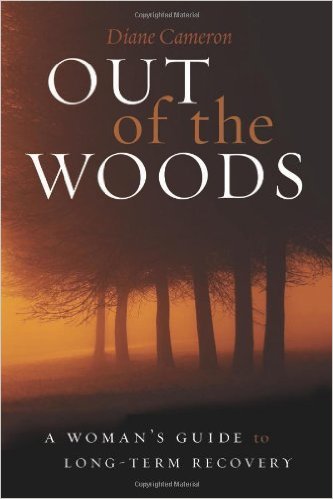
More on love and relationships in "Out of the Woods--A Woman's Guide to Long-term Recovery" published by Central Recovery Press.


Wednesday, October 11, 2017

The Comfort Food Diaries

I get caught on this hook over and over. Maybe you do too…or maybe you are a faster learner. But when I see women who are beautiful or smart or super successful, or who have a certain upper-middle class polished look and a lot of poise, I start to think...Well, …it’s actually what I don’t think:

I don’t think: “I wonder if she has ever been arrested?” or “I wonder if she drinks herself into oblivion every night?” Or “I wonder if her biggest secret is an alcohol-infused eating disorder punctuated by depression, anxiety or sex addiction?”

No, rather, I am more likely to think (yes even after 33 years of recovery) “Oh, look at her nice (hair, job, house, resume, poise) I’ll never be like that.” Yep—I am still judging the
books by the covers and comparing my insides to your outsides. Still. (Diane, stop already.)

But then I do stop cold when I pick up this new book, “The Comfort Food Diaries” by Emily Nunn. I look at the back flap first: Lots of good looks and poise and polish, and a writer-envy resume: A decade at The New Yorker, her own column, features reporter for the Chicago Tribune. And she’s writing about grief—the subtitle is “My Quest for the Perfect Dish to Mend a Broken Heart.”

And then I start to read, and my book-cover judgment falls away. Emily Nunn has been everywhere you’d expect from a successful well-educated journalist, and then some. Turns out that she’s been to hell and back, and to Betty Ford in-between. She’s been an alcoholic, relationship crazy, clinically depressed, heartbreakingly devastated by her brother’s death and then loss of her fiancĂ© and that meant that he also took his young daughter who was so important to Emily. 

Envy gone, jealousy vanished. Sisterhood in full force.

It’s a great book and a surprising story. And one of the cool things is that she includes recipes. Emily can cook and she cooked her way thru addiction and cooked her way out—and she cooked her way around the country—depending on the kindness of loved ones and friends who cared for her while she cried and cooked and healed. 

This is a travel book and a food history and a story of one woman’s heartbreaking breakdown and her (literally) recipe for putting a life back together. And yes, the writing is kick-ass good because, she was, after all, a writer for the New Yorker, and that’s not nothing.

Saturday, October 07, 2017

Be Kind


"Ultimately, we are all just walking each other home."

                                                                             --Ram Das


Wednesday, September 20, 2017

Taking Recovery to Work: What Does That Mean?

This year I have been thinking and writing about this idea of consciously taking principles of recovery to the work place. We do, “practice these principles in all our affairs” but sometimes when I listen to others in meetings—or listen to myself driving home from work—I really wonder about that “All of our affairs” part.

I know that we strive for “progress not perfection,” but still.  I think this is a good topic for women and men in long-term recovery: How are we, as recovering people, doing in our work/career/retirement lives? 
 
Here’s what I jotted down last night. See if any of this resonates with you:

My recovery tells me not to use drugs, alcohol, food, sex or other behaviors as a way to squash feelings or things I don’t want to look at. So in my work life how am I doing with control, perfectionism, workaholism, or sloth?

My recovery tells me to trust my Higher Power and that there is a plan for my life. Do I pray about my work? Do I trust the processes there?

My recovery tells me to be honest: both the  “cash register honesty” and people honesty. And to be honest with myself. Am I honest at work? With time, with responsibility? 

My recovery tells me to look at myself first and to “pull my projections” as Carl Jung taught Bill Wilson. We have the Tenth Step Axiom: When I am upset, the upset is something inside of me. That’s a hard one to practice at work. Ouchy!

My recovery tells me to “Think, Think, Think” and to “Let Go and Let God”. Can I apply that at work?

My recovery tells me that when I feel down or I’m struggling that I should work with a newcomer or another alcoholic. So, is the workplace equivalent mean that when I feel unhappy at work I should go help a coworker? Or do a helpful task that I don’t get credit for? Maybe just pitch in and be of service and not look for credit or praise? Maybe it means I should mentor someone or offer encouragement to someone at my workplace.

My recovery tells me, “Don’t use no matter what.” So, at work maybe that means that I should not use fear, dishonesty, unkindness, or ego.

My recovery tells me to take an inventory once a year—or as needed. So maybe for my job or career I could also look at my “saleable goods” (skills, talents, abilities) and decide what I can let go of: old pride, past accomplishments and the grudges that I am holding on to. 

Recovery tells me to make amends quickly and only point out my side of the street. So, am I able to say, “I’m sorry” and “I was wrong” and “I made a mistake” at work?

My recovery tells me that I am a work in progress, and that I always have more to learn. So, can I remember Dr. Bob’s great words when I am at work, and post this quote on my laptop:

“Humility is perpetual quietness of the heart.”?

***
To read more about long-term recovery check out the book: Out of the Woods published by Central Recovery Press.